

Wet Rock Forecasting
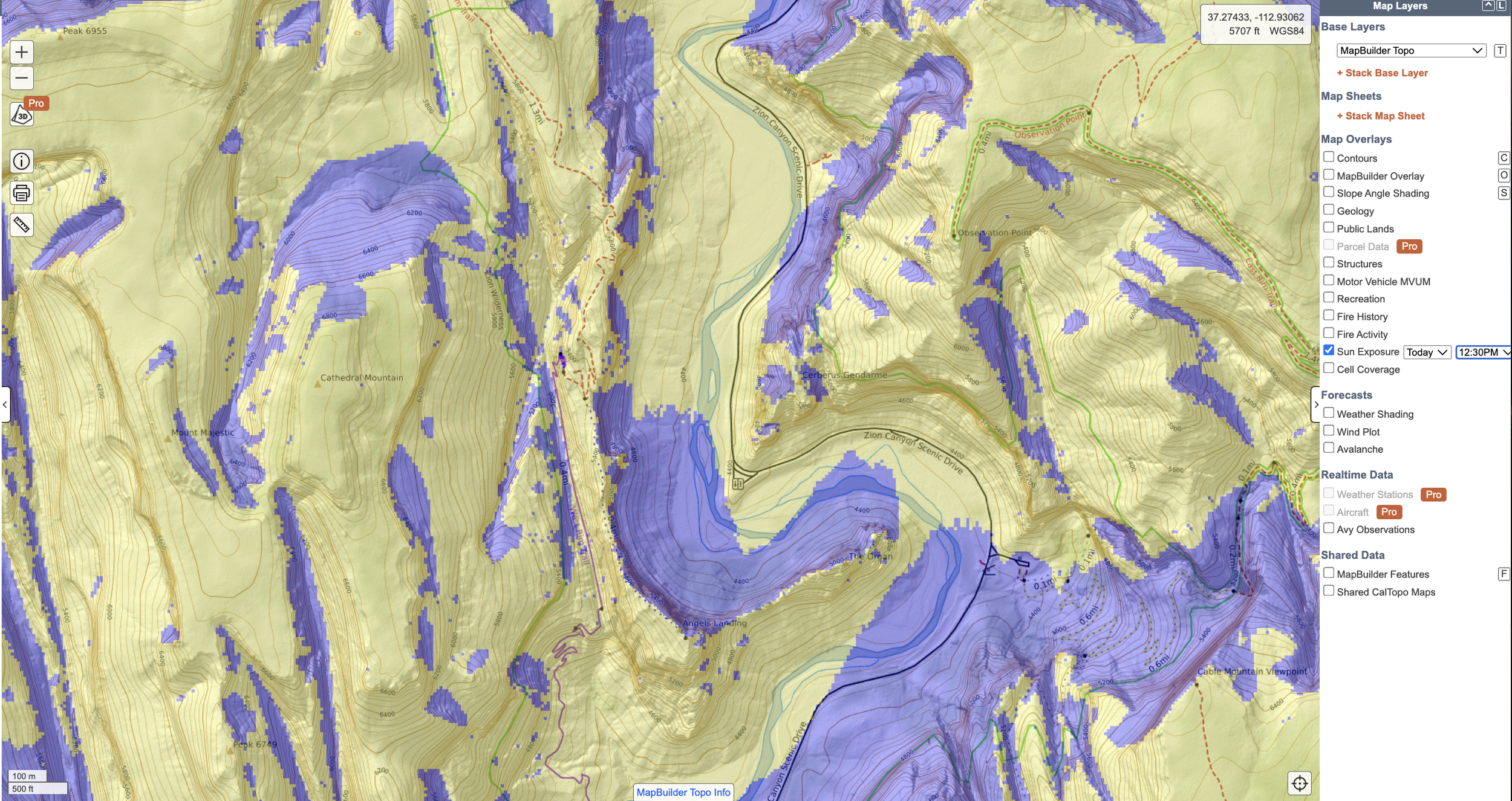
Utilize the National Weather Services hazard map’s precipitation analysis layer for visual overaly up to 72-hrs prior to your arrival.
https://www.weather.gov/wrh/hazards

Navigate to the “overlay” section on the right side, select “precipitation analysis” and then the interval.
This comobined with Caltopo.com’s “sun exposure” layer will keep you on the sunny aspects, and allow you to pick the best start time for optimal conditions.
www.caltopo.com
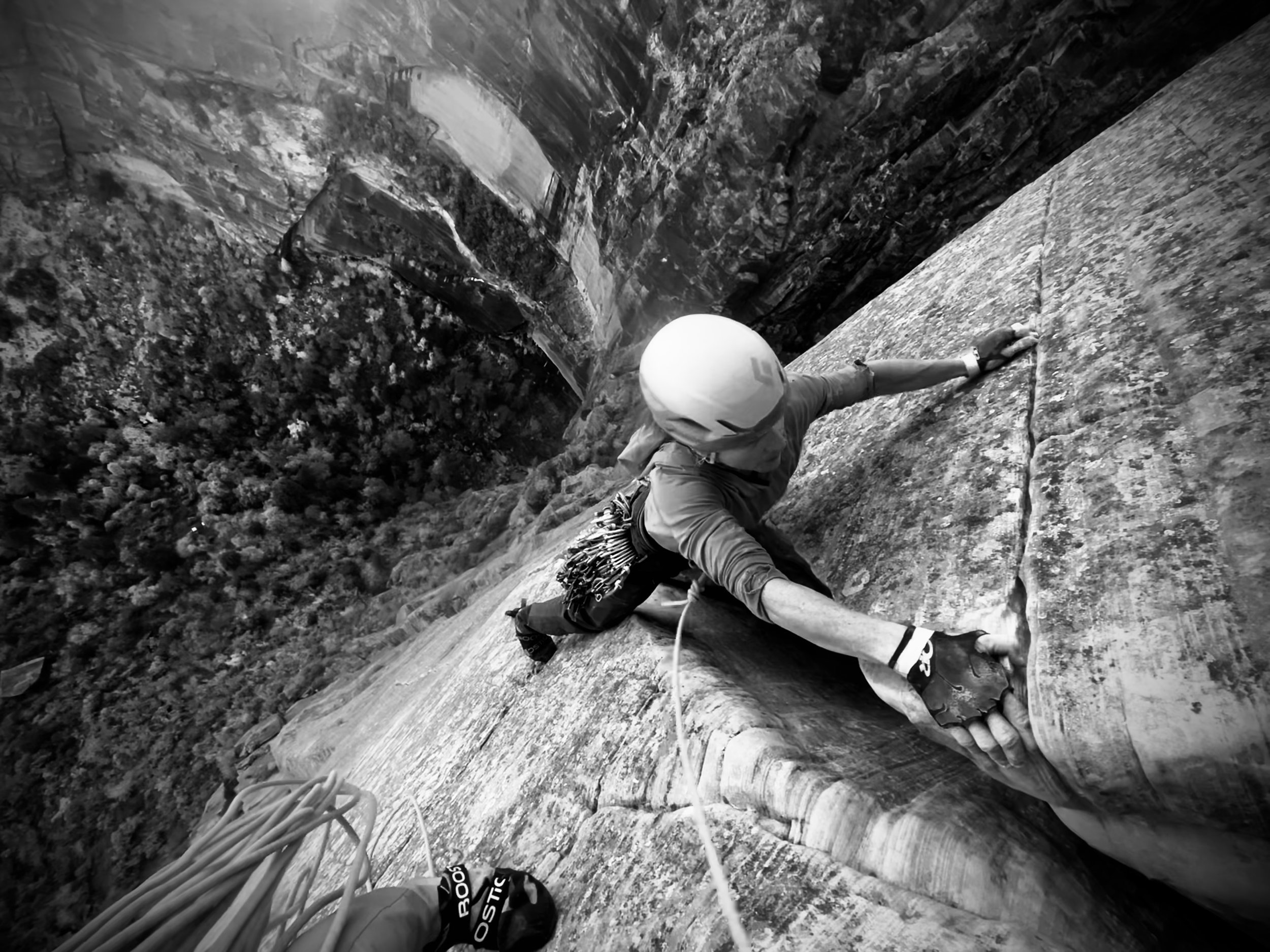
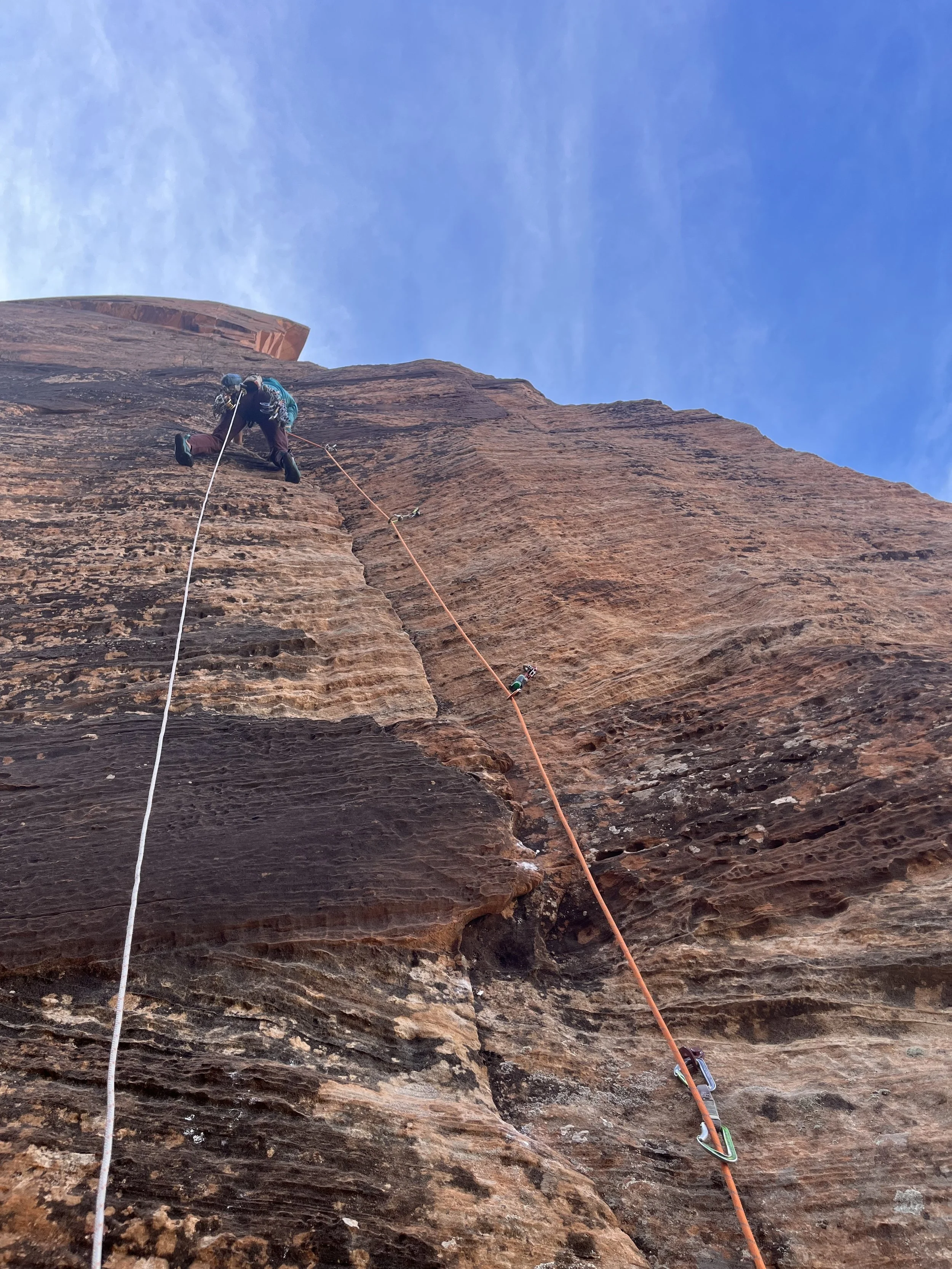
Zion rock considerations.
This is review to those that have visited, if not, it’s advice we’d give to anyone asking, its based on experience and the want for people visiting to have a good experience. Reach out to Zionclimbingcoalition@gmail.com with questions, were often climbing when the weather is good, but respond pretty quick when it’s raining :)
Climbing is inherently DANGEROUS, participate at your own risk and with your own discretion, this information is not a supplement for experience, field observations and conservative decision making.
Rock here is more unpredictable after rain.
Small holds, large holds, seemingly good cracks with “big cams” break.
Reporting is poor when accidents occur due to wet rock.
Data is limited on how/when/force required.
Solar aspects dry faster, E-SE-S-W-SW
South - West - South West, longer exposure, ideal for drying
The walls here are steep and get more sun than the often vegetated shaded ground, ground is not the *only factor
The time the wall gets sun is one part of the equation.
Micro aspects (large dihedrals) prolong shade and slow dry time.
Ledges or summits holding snow and melting on the route play a factor
Ground saturation does matter, but can be misleading as a lone indicator of rock saturation. There are many contributing factors to dry time on the Navajo sandstone.
Due to the numerous variables, despite waiting 48hrs on a South facing wall the porous nature of the rock, the density of the layer your climbing on and the force you place on the wrong place at the right time will determine if the rock breaks (in Zion).
The sandstone quality varies greatly on all elevations of routes and thus predictability is inherently challenging. Nothing is simple, but that doesn’t mean it isn’t manageable.
Climbing after rainfall increases the probability of rock breaking. The recommended aspects and dry times increase the probability of less saturated rock.
ZION IS NOT YOSEMITE. The gear on dry rock in ideal conditions is worse that your average climbing area. The rock is softer than Red Rock, the routes (even classics) have loose rock, thin flakes and fragile features. It’s one of the wildest areas to climb in, but it takes more care and high level of suspicion at all times than your typical destination climbing area.
Utilize the maps above, climb limestone until it drys, go to the coffee shop get a PSL (we know the one on the bar is yours) take an extra rest day, place more gear than you think.
Its just climbing rocks, no sense getting hurt
—With that said—
Its the coolest place on the planet to climb big sandstone, enjoy it, share it, take care of it. See you out there.
Weather
Windy.com is a great tool for forecasting here. Weather forecasts use weather models. Different models, different interpretation. Windy allows you to compare models side by side. Some years some models are better, but generally if all models agree most likley going to be as forecasted. Click “compare forecast” at the bottom of the screen, it’s nomrally hidden by ECMWF or GFS or an acroynm for a model. It doesn’t look like you can click it, but click or tap to see the compare function.
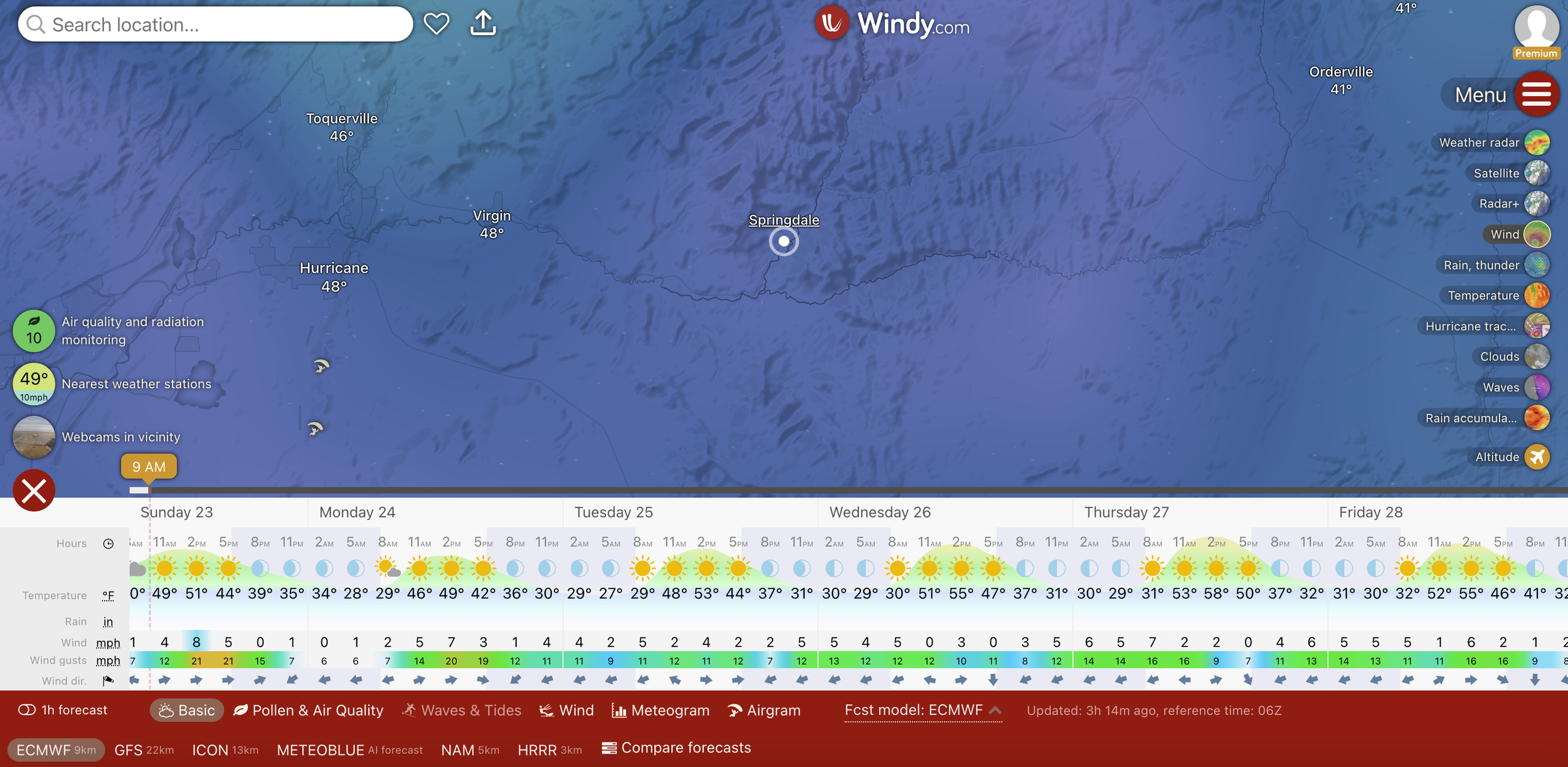
It will look like this
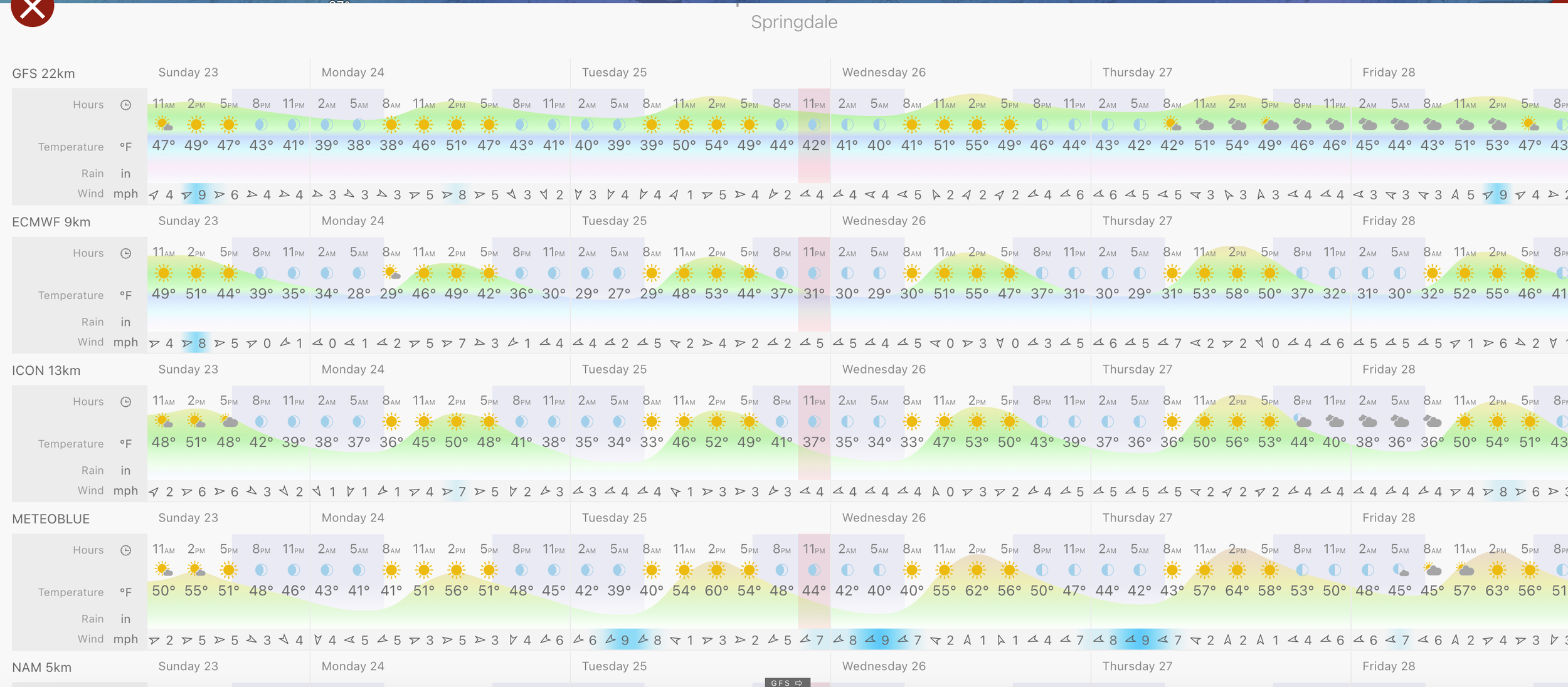
GFS, ICON, NAM are all models, scroll all the way right and it describes what model it is
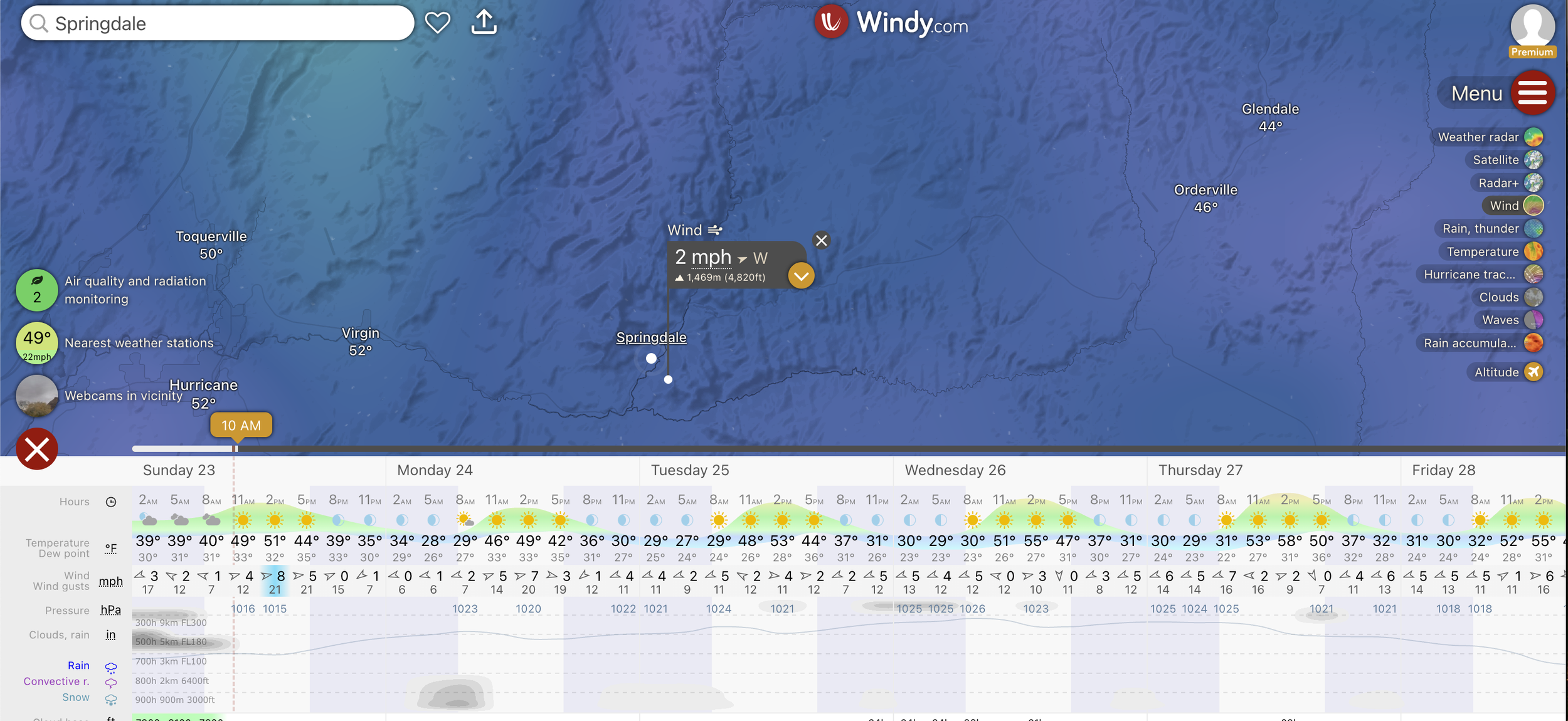
The meteogram layer shows clouds at specific elevations, rain, lighting, snow. Hope this helps! Enojy!
Red Chalk Mix
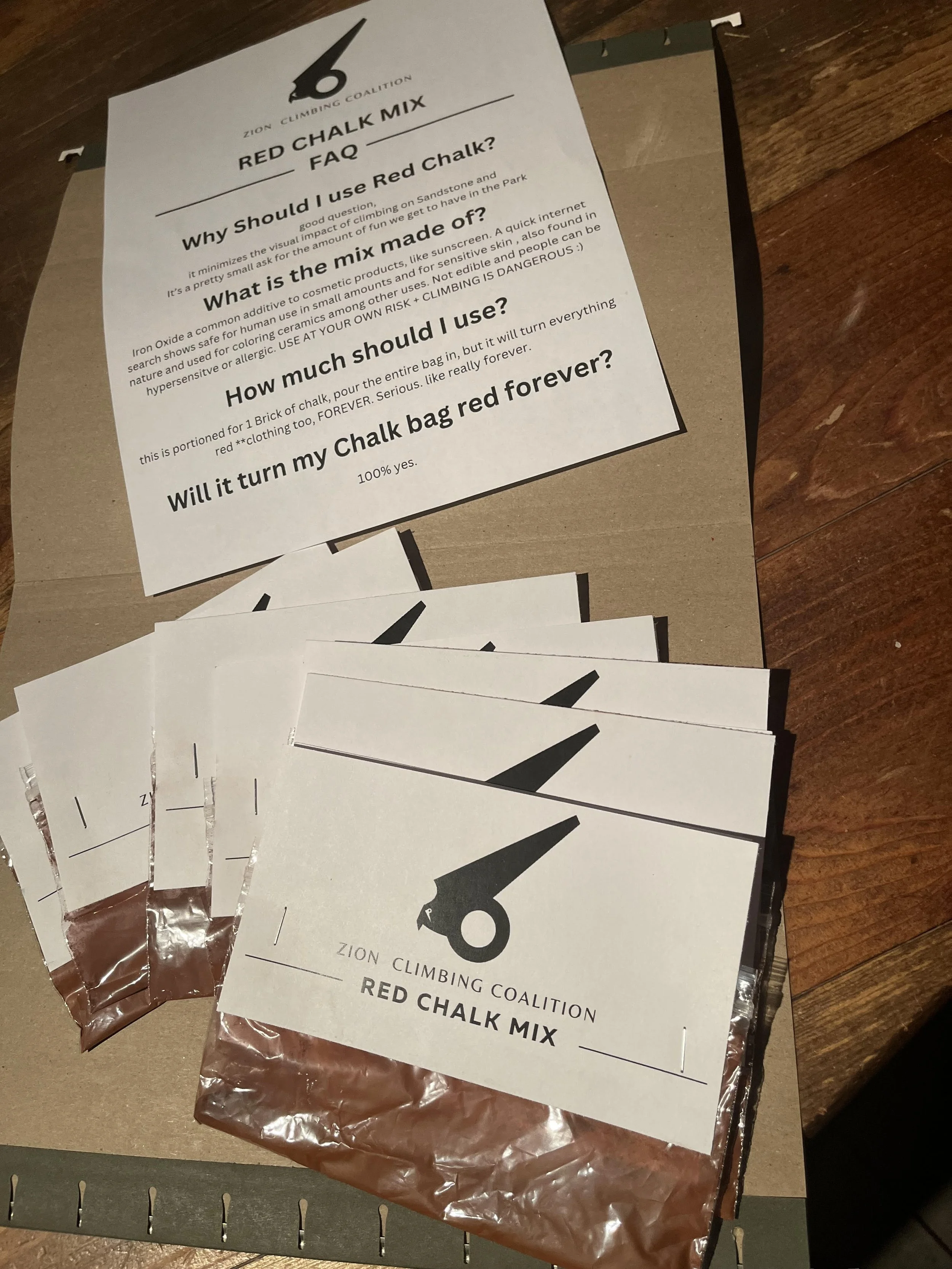
Red chalk mix (iron oxide) is available at Zion Outdoor in Springdale and Amazing Adventures in La Verkin. We ask for a donation of $5, or just take one and get us later. If you have $10 to spare, pay for someone else’s.
The Desert Rat in St. George also has climbing addicts wall street gold colored chalk as well.

Gatekeeper Rockfall | Fall 2023
Looks like the first and second pitches of the Gatekeeper wall were significantly affected.
The anchor from the tower to the ground is gone and likely loose rock on pitches 1 and 2.
There’s still a lot of loose rock overhead and the new talus field is very unstable, be mindful of overhead and underfoot hazards out there. Really big boulders will move. Lots of loose rock overhead on Gatekeeper specifically
The first pitch of locksmith dihedral seemed unchanged and accessible, albeit much new loose rock getting to the start of pitch 1 .
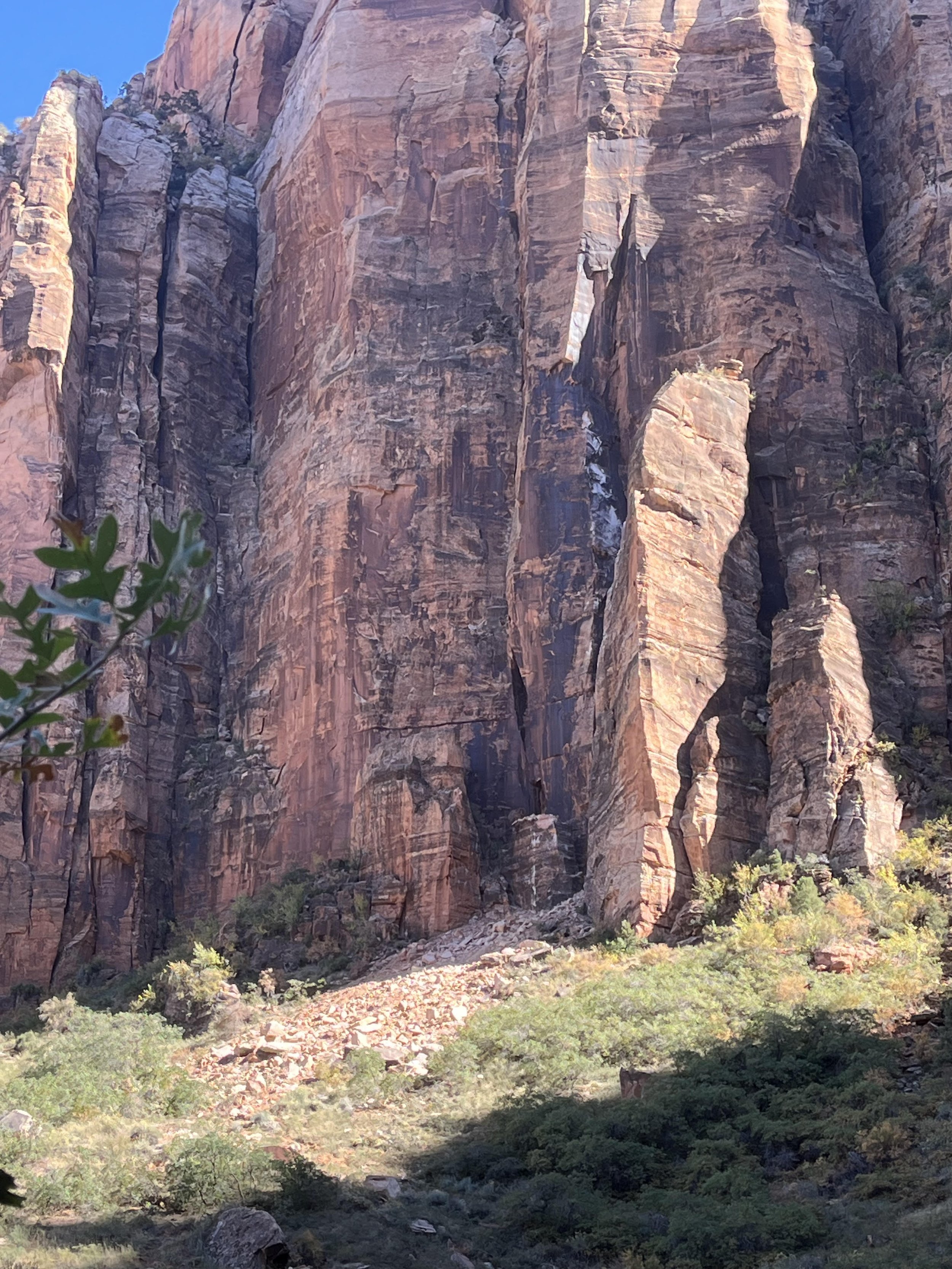
Looking at the Gatekeeper buttress from the Watchmen - Photo Credit Steffan Gregory ZCC

Base of locksmith dihedral on left. Base of Gatekeeper looking up and right - Photo Credit Steffan Gregory ZCC

Gatekeeper P1 - Photo Credit Steffan Gregory ZCC
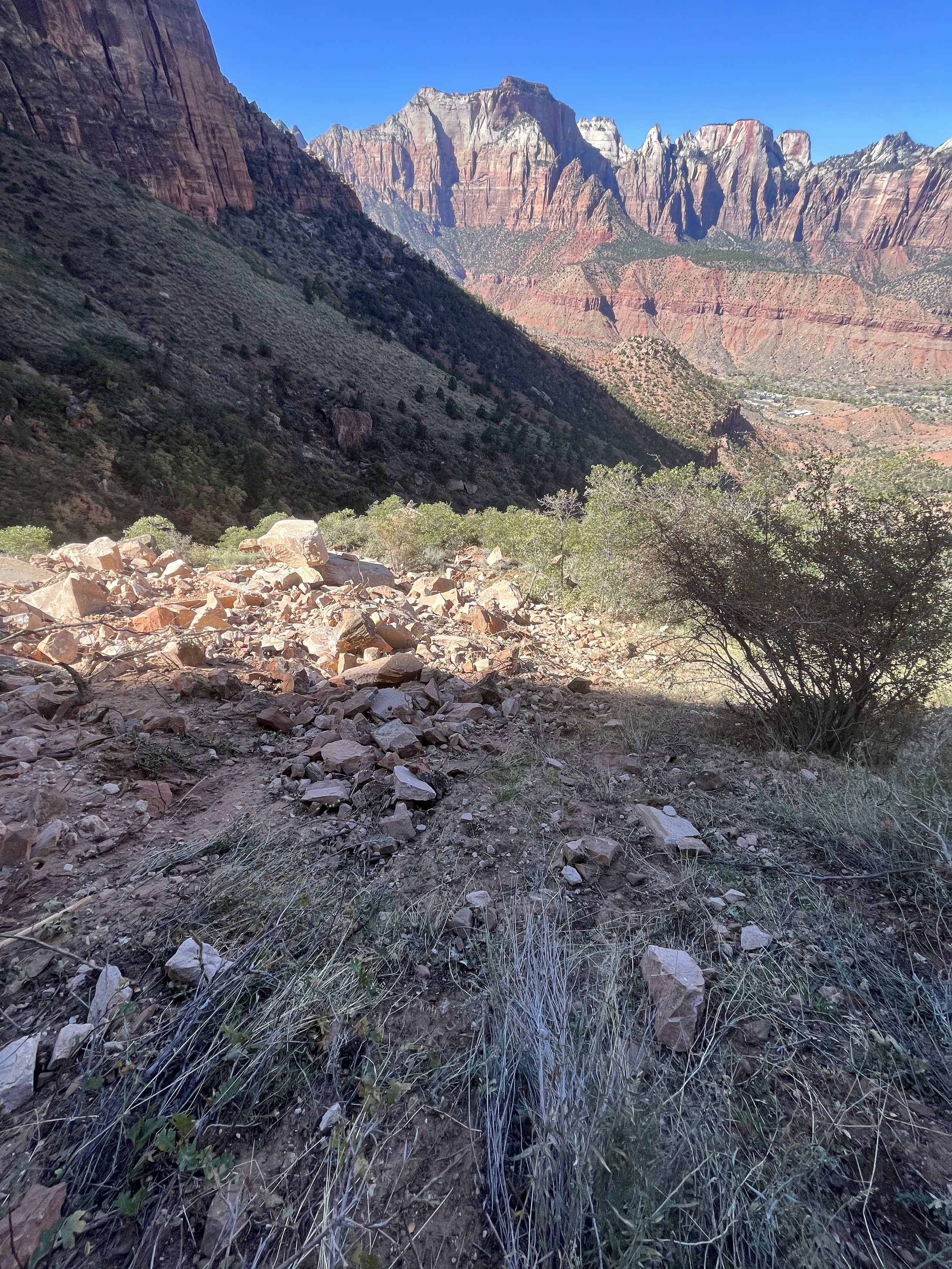
Debris below the route, very unstable - Photo Credit Steffan Gregory ZCC

Photo Credit Steffan Gregory ZCC
if you have more information please comment or share! Thank you for your support!
Zion Climbing Coalition and Zion National Park | Spring Falcon Update 2023
If you’ve ever wondered how local climbing organizations directly benefit you, here’s how: they get you access to more climbing!
If you’ve ever wondered how local climbing organizations directly benefit you, here’s how: they get you access to more climbing!
This spring the Zion Climbing Coalition and the Zion National Park wildlife program worked together to identify peregrine falcon nesting sites in order to open cliffs to climbing. Climbers and park staff dedicated over 200 hours to the program, positively identifying 3 falcon nests throughout the main canyon. Because of this effort rangers were able to reopen some of the biggest walls in the park, including the Streaked Wall, Angels Landing, the East Temple, Mount Spry, the Sentinel, Mountain of the Sun, and the North Twin Brother. It was the most successful season in the partnership’s four-year history.

Thanks to the efforts of the wildlife staff and volunteers, Prodigal Sun saw multiple ascents once opened, as well as several ascents of Mount Spry, and the Streaked Wall had its first spring ascent in over a decade when Connor Baty Soloed Tales of the Scorpion over three days this spring.

When the peregrine falcon was listed as an endangered species in 1973, Zion National Park began monitoring as many as 27 distinct peregrine falcon territories. Though no longer listed as endangered, peregrine falcons are still protected under the Migratory Bird Treaty Act of 1918, so the National Park continues to monitor and protect this species. The Zion wildlife program continues to monitor four breeding and nesting territories every spring and summer to allow this amazing species to continue to thrive, and to limit human/wildlife conflict.
Peregrines are notoriously territorial and have been known to dive-bomb climbers to protect their nests. If peregrine nesting sites are disturbed too much, the falcons may abandon their nests for the season. In order to allow the falcons the best chance at finding a suitable nest site and successfully raise their chicks, Zion National Park institutes blanket climbing closures starting March 1st each year, and then opens cliffs as biologists confirm nest sites throughout the spring and summer. The sooner the park staff can identity their nests, which often change location year-to-year, the earlier the surrounding climbs can be opened. Locating these nests early is how climbers have been helping provide access to the community. By August first, the chicks have fledged into flying, hunting falcons, and the cliffs can be reopened to climbing in full.
We’d like to give a big thanks to the Zion Wildlife Biologists Janice Stroud-Settles and Rachel Mangan for working with us, the ZCC Executive Director Steffan Gregory for setting this in motion four years ago, and all the volunteers for serving as good stewards of the areas they love to explore!
--